Turn transfer pricing policy into working calculations.
Renlind works with the data, policies and processes you already have. Start with one recurring task, configure the software around it and keep calculations, reviews and documentation connected from one period to the next.
01 / INPUTS
Use existing information
Begin with financial records and ERP extracts, spreadsheets, existing calculations, policies, documentation and intercompany agreements. Transaction data and organisational information provide context. Agree formats, mapping and data checks before use. A direct ERP connection is not needed to begin, subject to your data policies.
02 / ADAPTATION
AI helps prepare the work
AI helps organise information, interpret document structures, identify relevant inputs and support data mapping. It assists workflow configuration and prepares analysis and documentation for review. It does not replace data validation, calculation controls or professional judgment.
03 / EXECUTION
Apply agreed calculation rules
Configure cost bases, allocation methods and pricing rules for the agreed transactions. Track inputs and model versions, reconcile results and identify exceptions. Prepare recurring charges and proposed adjustments. Execution requires agreed permissions and limits, with actions recorded and reviewable.
04 / EXPERTISE
Knowledge within the process
Transfer pricing specialists help establish appropriate models, check assumptions and resolve complex questions. Review responsibilities are agreed with your team, and existing advisers can stay involved. Expertise supports the software and its use, rather than a separate large consulting implementation.
Before you start, we confirm what is available for your scope, what needs configuration and whether additional development is required. Planned capabilities are kept separate from the agreed delivery. Data connections and automation depend on the verified setup.
Every reporting period
Run the process. Keep the context.
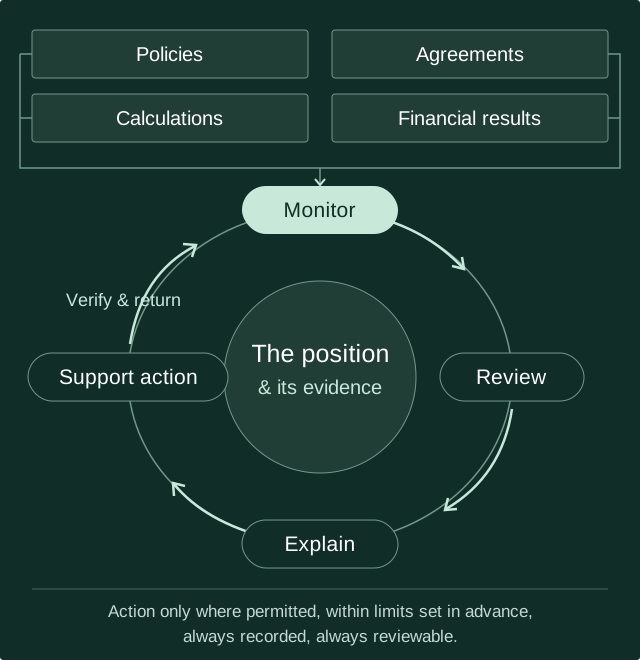
Update financial data, rerun calculations, prepare adjustments and maintain reports and documentation using the same evidence base. New results, organisational changes and relevant regulations, guidance or court decisions can trigger a review of the model and its application.
Monitor. Review. Explain. Support action. A difference prompts assessment, not an automatic assumption that prices must change.
Automated action follows agreed permissions, within limits set in advance, always recorded, always reviewable. Verify the outcome and carry approved changes into the next cycle.
Start with one real problem.
For example, a recurring intercompany service charge: use existing cost data, apply an agreed allocation rule, compare the result with charges already made and prepare any proposed adjustment with its supporting record.
Identify the process
Choose the entities, transactions and task. Agree expected outputs, responsibilities and the information needed.
You get: a clear starting scope.
Use what you already have
Organise the data and documents. Configure calculations, reviews and permissions, then test and reconcile the starting results with your team.
You get: configured software and a checked baseline.
Put the solution to work
Run the agreed process each period. Review exceptions, prepare outputs and extend the scope when useful. Further automation follows agreed controls and approvals.
You get: recurring outputs, recorded decisions and support.
Support that fits your team.
Product use
Help with everyday use, questions and issues in the agreed workflow.
Configuration changes
Maintain data inputs, calculations, reports and permissions as your business changes.
Specialist involvement
Help with transfer pricing models, policies, open questions and review of results where agreed.
Different support levels are available. Scope, availability, response times, responsibilities and maintenance of connections are agreed before you start.
Tell us which calculations, reconciliations or documentation take the most work. We can explore a practical starting point using your existing information.